Advertisements
🚀 Asa Candler's revolution: aggressive marketing and national expansion
Asa Candler was a born visionary. He understood that Coca-Cola should not be sold as a medicine, but as refreshing drinkAnd he began to apply marketing strategies that were unprecedented at the time. Among his tactics were:
- Free tasting coupons
- Calendars, posters and clocks with the logo
- Distribution of syrup to pharmacies throughout the country
- Expansion of the soda fountain network
Their smartest strategy was to associate Coca-Cola with an experience: refreshing, energetic, social, and modern.
Thanks to Candler, Coca-Cola ceased to be a local product and became a national American brand. In just ten years, the company went from a small family operation to an industrial giant.
🧴 The arrival of the bottle and the unification of the brand
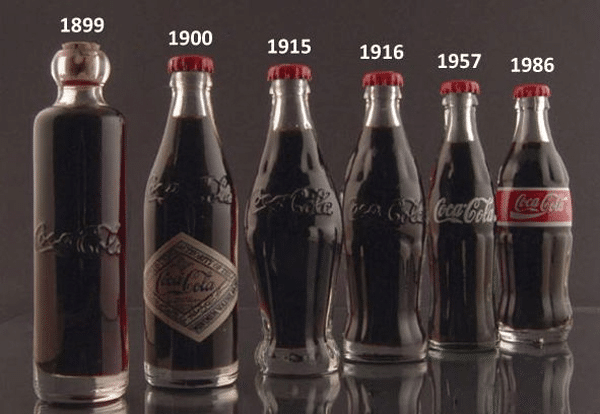
During the 1890s, Coca-Cola was only sold at soda fountains. But in 1899, two Tennessee businessmen applied for permission to bottle The drink. Candler, without imagining the explosion that would come, sold the bottling rights for barely 1 dollar.
Advertisements
The bottle changed everything. It allowed Coca-Cola to reach supermarkets, train stations, rural stores, and more cities. In 1915, the company launched the famous contour bottle, the bottle with curves inspired by the silhouette of a cocoa pod.
Advertisements
That design would become a global icon.
🌍 Internationalization: Coca-Cola conquers the world
After decades of expansion in the United States, the next step was to enter international markets. Between 1900 and 1930, Coca-Cola reached:
- Canada
- Mexico
- Panama
- Cuba
- Europe
During World War II, the brand made a strategic decision: to offer a symbolic price to American soldiers anywhere in the world. This allowed Coca-Cola to quickly enter dozens of countries.
The company accompanied the armies with mobile factories, ensuring that the drink became part of the daily lives of millions of people.
By the end of the war, Coca-Cola already had a global presence.